![Voltaiq_Logo_Black_Transparent- 600.png]](https://1913583.hs-sites.com/hs-fs/hubfs/Voltaiq_Logo_Black_Transparent-%20600.png?height=42&name=Voltaiq_Logo_Black_Transparent-%20600.png)
Introduction
Battery testing is generating increasingly large volumes of data. However, logging configurations are often reused across fundamentally different test types. This typically results in either excessive data volumes or insufficient resolution for meaningful analysis. In practice, data logging strategy is a trade-off between the information required and the constraints of the testing program.
Logging Strategy is a Trade-off
Logging resolution should be aligned with the objectives of the test. Higher resolution improves data fidelity but increases file size, storage costs, and processing overhead. Lower resolution reduces data volume but may limit the depth and quality of analysis.
Several practical constraints must also be considered:
- Long-duration tests require lower data density
- High channel counts significantly increase total data volume
- Cycler capabilities may restrict available logging modes
An effective logging strategy balances analytical insight, data volume, and operational practicality.
Different Tests Require Different Logging Approaches
| Test Type | Logging Priority |
| Long duration cycling | Lower frequency to maintain manageable file sizes |
| ICA / dQ-dV analysis | Voltage-based logging to preserve resolution |
| Modelling / dynamic cycling | Higher resolution; particularly around step changes |
| Pack / module testing | Scaled intervals to control data volume |
There is no universal logging configuration suitable for all test types.
A common approach is to combine multiple logging conditions (e.g. dt and dV) to meet competing requirements. However, this can create overlapping samples, leading to noisy data due to cycler resolution limits and instability in calculations such as dQ/dV. Logging conditions should therefore be applied deliberately, with clear awareness of their impact on data quality.
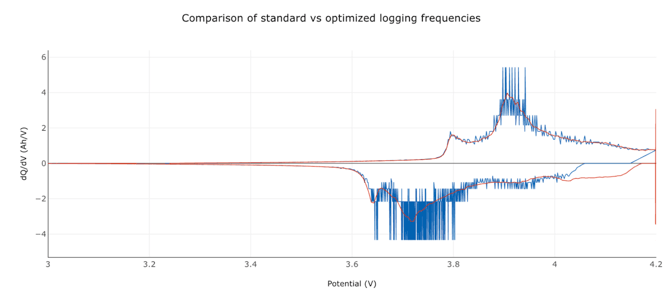
Figure 1. Comparison of different logging types (time-based versus voltage-based)
While best practice is to avoid overlapping recording conditions, in practice this is not always feasible. In such cases, Voltaiq provides capabilities to process and smooth noisy or irregular data arising from suboptimal logging configurations.
Key Takeaways
-
The objective is not to collect more data, but to collect the right data.
-
Defining logging strategies by test type improves data usability, reduces storage and processing costs, and enhances the manageability of large testing programs.
-
Consistent and structured logging approaches also enable more efficient analysis and more reliable decision-making.
Voltaiq can help provide best practices and recommendations on your specific testing protocols. Contact us at support@voltaiq.com to learn more.